Connect with us

blog

Yamaha TW200 Review: Specs, Features, Performance, and Buying Guide

Published

on

mariachi instruments

The Yamaha TW200 is a distinctive dual-purpose motorcycle that has earned a reputation for its unusual appearance, approachable design, and ability to handle a variety of everyday riding conditions. With its wide tires, relatively low seat, compact dimensions, and air-cooled engine, the TW200 offers a different experience from many modern motorcycles that prioritize high speeds, aggressive styling, or specialized performance. It is designed for riders who enjoy exploring back roads, traveling through small towns, riding on suitable dirt trails, and experiencing the outdoors without needing a large or complicated motorcycle. Its simple design and practical features make it particularly interesting to people who want a motorcycle that can serve both recreational and everyday purposes.

For anyone searching for “TW200 Yamaha,” understanding the motorcycle’s strengths, limitations, specifications, and ownership requirements is essential before deciding whether it is the right choice. The Yamaha TW200 is not designed to compete with high-performance sport bikes or powerful adventure motorcycles, and its appeal comes from offering a different kind of riding experience. Its low seat height, broad tires, manageable engine output, and straightforward controls make it attractive to many beginners and experienced riders alike. This comprehensive guide explains the Yamaha TW200’s engine, handling, comfort, fuel economy, maintenance, and practical uses, helping prospective buyers and motorcycle enthusiasts understand what makes this unusual dual-sport motorcycle worth considering.

What Is the Yamaha TW200?

The is a small-displacement dual-purpose motorcycle designed to combine everyday road use with recreational off-road riding. The TW200 name refers to its model designation and approximately 200cc engine class, although its actual engine displacement is 196cc. Its defining characteristic is the use of unusually wide tires, which give it a recognizable appearance and contribute to its distinctive riding personality. Rather than being a dedicated competition dirt bike, the TW200 is intended for more relaxed riding, including paved streets, gravel roads, maintained trails, and other appropriate surfaces. Yamaha describes it as a versatile dual-purpose machine, highlighting its low seat, comfortable ride, and wide tires as important parts of its appeal.

One of the most interesting aspects of the Yamaha TW200 is how it combines relatively simple mechanical components with a practical riding position. The motorcycle uses a single-cylinder four-stroke engine, a five-speed manual transmission, conventional suspension, and a chain final drive. Its design emphasizes accessibility and ease of use rather than advanced electronic systems or extreme performance. This approach makes the TW200 especially appealing to people who prefer a straightforward motorcycle that can be used for exploring their surroundings without requiring the specialized equipment or riding experience associated with larger off-road machines. Although it is a small motorcycle, it has a distinctive character that separates it from many other bikes in the same general displacement category.

Yamaha TW200 Specifications

Understanding the Yamaha TW200 specifications helps explain its intended purpose and the type of riding for which it is best suited. The motorcycle combines a compact engine with a relatively low seat, broad tires, and suspension designed for a mixture of paved and unpaved surfaces. Its specifications are particularly relevant to new riders, shorter riders, recreational motorcyclists, and anyone comparing small dual-sport motorcycles. The following table summarizes the published specifications for the 2026 United States model. Specifications can vary by model year, market, and version, so buyers should confirm the details for the exact motorcycle they intend to purchase.

Engine displacement

196cc

Wet weight

278 lb

Seat height

31.1 in

Fuel capacity

1.8 gal

Specification

2026 Yamaha TW200

Engine type

Air-cooled, SOHC, four-stroke, two-valve single

Displacement

196cc

Fuel delivery

Mikuni 28mm carburetor

Transmission

Five-speed manual

Final drive

Chain

Front suspension travel

6.3 inches

Rear suspension travel

5.9 inches

Front brake

220mm disc

Rear brake

110mm drum

Front tire

130/80-18

Rear tire

180/80-14

Seat height

31.1 inches

Wheelbase

52.2 inches

Ground clearance

10.4 inches

Wet weight

278 pounds

Manufacturer-estimated fuel economy

78 mpg

Source: Yamaha’s official 2026 United States specifications. Fuel economy is a manufacturer estimate, not a guarantee of real-world mileage.

These figures show that the Yamaha TW200 is built around accessibility and manageable performance. Its relatively low seat height can help riders feel more secure when stopping, while the wide tires and compact chassis contribute to its recognizable handling characteristics. The 196cc engine is designed to provide useful low- and mid-range power for ordinary riding and off-road exploration, rather than the high-speed performance expected from larger motorcycles. Its relatively modest weight also makes it easier to maneuver than many heavier adventure bikes, although riders should remember that the motorcycle still requires proper balance, control, and safe riding technique.

Yamaha TW200 Engine and Performance

The Yamaha TW200 is powered by an air-cooled, single-cylinder, four-stroke engine with a displacement of 196cc. Its engine design prioritizes straightforward operation and useful low-speed performance, making it suitable for relaxed riding on ordinary roads and suitable off-road routes. Yamaha highlights the engine’s low- and mid-range power delivery as an important feature, particularly for riders exploring trails or navigating slower sections of terrain. The engine is paired with a five-speed manual transmission and a wet multiplate clutch, allowing riders to select the appropriate gear for different riding conditions. This combination gives the TW200 a practical and uncomplicated mechanical layout that suits its dual-purpose character.

In everyday riding, the Yamaha TW200 is best understood as a motorcycle designed for manageable acceleration and steady progress rather than rapid high-speed performance. Its engine is well suited to neighborhood streets, country roads, gravel tracks, and relaxed recreational journeys, where predictable power delivery can be more valuable than maximum horsepower. Riders who are new to manual motorcycles may appreciate learning how the clutch, throttle, and transmission work together on a relatively approachable machine. However, the TW200’s modest displacement means that riders who regularly travel on fast highways, carry heavy loads, or need strong acceleration in demanding traffic should carefully consider whether its performance matches their needs. It is important to choose a motorcycle according to the riding conditions that matter most, rather than assuming that a larger engine or a more aggressive design is always better.

Yamaha TW200 Top Speed and Highway Performance

The Yamaha TW200 is not primarily designed as a high-speed highway motorcycle. Its 196cc engine, broad tires, and dual-purpose design make it more appropriate for moderate speeds and shorter journeys than for sustained high-speed travel. Actual top speed can vary depending on rider weight, wind, road gradient, mechanical condition, altitude, and other factors. Because the manufacturer’s specifications do not provide a guaranteed top-speed figure, it is better to avoid treating a single online speed claim as an official specification. Prospective buyers should also consider the difference between a motorcycle’s maximum achievable speed and the speed at which it can comfortably maintain a journey over an extended period.

For many riders, the Yamaha TW200 is most enjoyable on secondary roads, quiet rural routes, and recreational paths where a relaxed pace is part of the experience. It can be used on public roads where it is properly equipped, registered, insured, and legally permitted, but suitability for highway travel depends on local road conditions and traffic speeds. Riders who need to travel long distances on high-speed highways may find a larger motorcycle more appropriate, particularly if they regularly encounter steep hills, strong winds, or heavy traffic. The TW200’s strengths become more apparent when it is used for the type of riding it was designed to support, rather than being judged solely by its maximum speed.

Fat Tires and Off-Road Capability

One of the most recognizable features of the Yamaha TW200 is its extra-wide tire design. The front tire measures 130/80-18, while the rear tire measures 180/80-14 on the current United States model. These broad tires contribute to the motorcycle’s distinctive appearance and are an important part of its identity as a recreational dual-purpose machine. Yamaha emphasizes their contribution to traction and rider comfort across a range of terrain. On appropriate surfaces, the tire design can make the motorcycle feel approachable and stable, especially during relaxed riding on gravel roads and maintained trails.

The TW200’s off-road capability should nevertheless be understood in the context of its intended use. It is well suited to exploring suitable dirt roads, riding through accessible trails, and enjoying outdoor routes that do not demand extreme suspension performance or competition-level handling. It is not automatically the best choice for every type of off-road terrain, and wide tires do not eliminate the need for careful throttle control, braking, balance, and appropriate tire pressure. Deep mud, loose sand, steep rocky climbs, and highly technical trails can present challenges that depend on rider skill, tire condition, setup, and the motorcycle’s limitations. Riders should choose legal and suitable routes, wear protective equipment, and avoid assuming that the TW200’s distinctive tires make it capable of safely handling every surface.

Yamaha TW200 Seat Height and Riding Comfort

The Yamaha TW200 has a published seat height of 31.1 inches, or approximately 790 millimeters, on the current United States model. This relatively low seat height is one of its most appealing features, especially for riders who feel uncomfortable on taller dual-sport motorcycles. Being able to place a foot securely on the ground can improve confidence when stopping, maneuvering at low speeds, or parking on uneven surfaces. However, seat height alone does not determine whether a motorcycle will fit a particular rider. Seat width, suspension sag, footwear, leg length, and riding experience all influence how comfortably someone can reach the ground. The best way to evaluate the TW200’s fit is to sit on the motorcycle and, where possible, take a supervised test ride.

Comfort is another important consideration for riders who plan to use the Yamaha TW200 for everyday journeys or recreational exploration. Its upright riding position and relatively compact dimensions make it suitable for a relaxed style of riding, while the suspension provides a degree of movement over uneven surfaces. The motorcycle is not a luxury touring machine, so long-distance comfort will depend on the rider’s preferences, road conditions, and the amount of time spent in the saddle. Riders with longer legs or larger body frames should pay particular attention to the seating position and available space, while shorter riders may find the low seat particularly appealing. A proper fit is more important than relying on general claims that a motorcycle is comfortable for everyone.

Yamaha TW200 Fuel Economy and Riding Range

Fuel economy is another reason the Yamaha TW200 may appeal to riders seeking an economical recreational motorcycle. Yamaha lists an estimated fuel economy of 78 miles per gallon for the current United States model, along with a fuel capacity of 1.8 US gallons. These figures suggest that the TW200 is designed for relatively economical riding, although actual mileage will depend on riding style, terrain, maintenance, weather, and other conditions. Manufacturer estimates should be treated as a reference point rather than a promise of what every owner will achieve.

For practical trip planning, it is wise to leave a margin rather than calculating a journey around the theoretical maximum range. Frequent acceleration, sustained higher speeds, steep climbs, carrying additional weight, or riding in difficult terrain can increase fuel consumption. Riders exploring remote areas should identify fuel stops in advance and avoid assuming that a small motorcycle can travel indefinitely without refueling. Keeping the motorcycle properly maintained, checking tire pressures according to the owner’s manual, and adopting a smooth riding style can help support efficient operation. For most prospective owners, the more important question is whether the TW200’s actual range and refueling requirements fit their intended routes.

Yamaha TW200 Reliability and Maintenance

The Yamaha TW200 has a straightforward mechanical design that can appeal to riders who prefer a motorcycle without unnecessary complexity. Its air-cooled engine, conventional transmission, and relatively simple chassis make routine ownership easier to understand than that of some more technologically complicated motorcycles. Yamaha also lists features such as a counterbalanced engine, digital ignition, and an automatic cam-chain tensioner as part of the TW200’s design. These features contribute to its practical character, but they should not be interpreted as a guarantee that the motorcycle will never experience mechanical problems. Reliability depends on proper maintenance, riding conditions, storage, and the condition of individual components.

Regular maintenance is essential for keeping the Yamaha TW200 operating safely and efficiently. Owners should follow the maintenance schedule in the official owner’s manual, including the recommended checks for engine oil, brakes, tires, chain condition, air filter, cables, fasteners, and other important components. A used TW200 deserves particular attention because previous owners may have missed maintenance intervals, used unsuitable replacement parts, or modified the motorcycle in ways that affect its operation. A well-maintained example with clear service records is generally a more reassuring purchase than one with an unknown history, even if the latter appears cleaner or has a lower asking price.

Common Yamaha TW200 problems to check

A buyer researching Yamaha TW200 common problems should distinguish between documented model-specific faults and ordinary inspection concerns that apply to used motorcycles generally. The following are useful areas to examine when considering a used TW200; they are not a claim that every motorcycle will develop these problems.

  • Engine condition: Check for abnormal noises, oil leaks, smoke, difficult starting, and evidence of neglected servicing.

  • Carburetor and fuel system: Look for poor running, fuel leaks, or signs that the motorcycle has been stored for a long time without appropriate preparation.

  • Tires and wheels: Inspect the tires for age, cracks, uneven wear, and suitability for the intended riding conditions.

  • Chain and sprockets: Check for excessive wear, corrosion, incorrect adjustment, or damaged teeth.

  • Brakes and suspension: Confirm that the brakes operate correctly and inspect the suspension for leaks or damage.

  • Frame and controls: Look for crash damage, bent components, damaged wiring, and modifications that may compromise safety.

A professional inspection is worthwhile if the buyer is unfamiliar with motorcycle mechanics. The condition of a used motorcycle can vary substantially, and a careful inspection is more useful than assuming that a particular model is either completely trouble-free or inherently unreliable.

Is the Yamaha TW200 Good for Beginners?

The Yamaha TW200 can be an appealing option for beginner riders because it combines a relatively low seat, a manageable engine, and a practical riding position. New riders often benefit from motorcycles that allow them to concentrate on learning fundamental skills such as clutch control, braking, turning, and maintaining balance without being overwhelmed by excessive power. The TW200’s compact design and low-speed character can make it approachable for people who are developing confidence. Yamaha specifically identifies its low seat height and user-friendly design as important features.

However, a beginner motorcycle should be selected according to the rider’s physical fit, training, and intended use rather than its engine size alone. The TW200 still has a manual clutch, requires proper coordination, and can be challenging if it is ridden beyond the rider’s abilities or used on unsuitable terrain. Beginners should complete appropriate motorcycle training, wear a properly fitted helmet and protective equipment, and practice in a controlled environment before riding in traffic or on trails. A test ride, where available and permitted, can help determine whether the motorcycle feels comfortable and manageable. For a rider who values a relaxed pace and occasional dirt-road exploration, the TW200 may be a particularly attractive choice.

Yamaha TW200 for Everyday Riding and Commuting

The Yamaha TW200 can be practical for everyday riding when the route and traffic conditions suit its performance. Its compact dimensions, approachable seat height, and relatively economical engine make it an interesting option for local journeys, errands, and commuting on roads where moderate speeds are appropriate. Riders who enjoy taking quieter routes may also appreciate the opportunity to combine everyday transportation with occasional recreational detours. Its distinctive design gives it a personality that differs from conventional commuter motorcycles, while its dual-purpose layout offers flexibility for riders who do not want a machine dedicated exclusively to paved streets.

Nevertheless, the TW200 is not necessarily the best choice for every commute. Riders who travel long distances at highway speeds, regularly carry a passenger, or need strong acceleration for busy traffic may prefer a motorcycle with more power and greater touring capability. Comfort during extended rides also depends on the rider’s size, seating position, and road conditions. Before buying a TW200 for commuting, consider the typical traffic speed, journey length, weather, storage needs, and whether the motorcycle’s range is suitable for the route. Its practical value comes from matching its strengths to the rider’s actual daily requirements.

Yamaha TW200 Price and Buying Considerations

The price of a Yamaha TW200 depends on the model year, country, condition, dealer charges, and whether the motorcycle is new or used. As a reference point, Yamaha’s official United States website lists the 2026 TW200 with a starting manufacturer’s suggested retail price of $4,999, before applicable destination charges, taxes, registration, preparation, and other dealer costs. This is a United States reference price and should not be treated as a universal price for every market. Buyers in other countries should check their local Yamaha distributor or authorized dealer for current pricing and availability.

When shopping for a used Yamaha TW200, compare motorcycles of similar model years and condition rather than focusing only on the lowest advertised price. Ask about maintenance records, ownership history, modifications, accident damage, and the condition of consumable components such as tires, brake parts, and the drive chain. It is also sensible to confirm that the motorcycle’s identification documents and registration details are correct and that it can legally be used for the intended purpose. If a used bike has been heavily modified for off-road riding, verify that the modifications are safe, properly installed, and compatible with local road regulations. A slightly more expensive motorcycle with a clear history and good mechanical condition may offer better long-term value than a neglected example.

Yamaha TW200 Accessories and Customization

The Yamaha TW200 can be adapted to suit different riding preferences through accessories and carefully selected modifications. Riders who use the motorcycle for recreational exploration may consider luggage racks, suitable bags, hand protection, or other equipment designed for their intended routes. Commuters may prefer practical additions that support carrying everyday items, while recreational riders may focus on protective equipment and storage for longer outings. Before purchasing accessories, check their compatibility with the exact model year and make sure that any added equipment does not interfere with steering, suspension movement, lighting, braking, or safe control of the motorcycle.

Customization should also take into account the TW200’s intended role. A modification that improves one aspect of riding may create disadvantages elsewhere, particularly if it changes the motorcycle’s weight, gearing, ergonomics, or tire setup. Riders should avoid assuming that every aftermarket part will improve performance or reliability. When in doubt, consult a qualified motorcycle technician and use the owner’s manual as a reference for safe operation and maintenance. The most useful modifications are those that solve a genuine problem for the owner while preserving the motorcycle’s safe and predictable handling.

Yamaha TW200 vs. Other Dual-Sport Motorcycles

Comparing the Yamaha TW200 with other dual-sport motorcycles helps prospective buyers decide whether its unusual design is the right fit. Some competing motorcycles prioritize lower weight, greater engine performance, longer-distance travel, or more specialized off-road ability. The TW200 instead emphasizes approachable dimensions, wide tires, a low seat, and relaxed riding. These characteristics make it distinctive, but they also mean that it should not automatically be considered the best choice for riders who need maximum highway performance or advanced off-road capability.

A useful comparison should include engine performance, seat height, wet weight, suspension, tire availability, fuel capacity, maintenance requirements, local dealer support, and total ownership costs. Riders should also compare the actual models and model years available in their country, because specifications and equipment can differ between markets. The most suitable motorcycle is the one that fits the rider’s experience, physical needs, budget, and typical riding conditions. For someone who values an accessible, distinctive dual-purpose motorcycle, the Yamaha TW200 may be more appealing than a larger or more powerful alternative.

Who Should Buy the Yamaha TW200?

The Yamaha TW200 is particularly worth considering for riders who want a straightforward motorcycle for relaxed road riding and suitable off-road exploration. It may appeal to beginners who want a manageable machine, experienced riders looking for a recreational second motorcycle, and people who enjoy exploring gravel roads and rural routes. Its distinctive styling and broad tires also make it attractive to enthusiasts who appreciate motorcycles with a recognizable identity. Riders who value simplicity and a relaxed pace may find that the TW200 offers a satisfying experience without requiring the performance or complexity of a larger motorcycle.

On the other hand, riders who regularly need to travel at high highway speeds, carry heavy loads, or tackle highly technical off-road terrain should compare the TW200 carefully with other motorcycles. Its small engine and relaxed design are advantages for some uses but limitations for others. The best buying decision comes from being realistic about the motorcycle’s strengths and weaknesses. A careful test ride, review of the specifications, and inspection of the exact motorcycle can help determine whether it will provide the kind of riding experience the buyer wants.

Conclusion

The Yamaha TW200 remains an appealing dual-purpose motorcycle because it offers a distinctive combination of wide tires, approachable dimensions, a relatively low seat, and a straightforward 196cc engine. It is designed for riders who enjoy relaxed transportation, outdoor exploration, and the flexibility of a motorcycle that can handle appropriate paved and unpaved routes. Rather than competing directly with high-performance sport bikes or large adventure motorcycles, the TW200 provides a practical alternative for people who value simplicity, accessibility, and a unique riding experience.

For anyone researching “TW200 Yamaha,” the most important step is to consider how the motorcycle fits their individual needs. Its manageable engine and low seat may make it attractive to beginners, while its unusual design and recreational versatility can appeal to experienced riders as well. However, buyers should carefully evaluate highway requirements, comfort, maintenance history, and local pricing before making a decision. With realistic expectations, proper training, and regular maintenance, the Yamaha TW200 can be a rewarding motorcycle for riders who appreciate its particular strengths.

4. Frequently asked questions about the Yamaha TW200

1. What is the engine size of the Yamaha TW200?

The Yamaha TW200 has a 196cc air-cooled, four-stroke, single-cylinder engine. It uses a five-speed manual transmission and is designed for practical, relaxed riding rather than high-performance racing.

2. Is the Yamaha TW200 a good motorcycle for beginners?

Yes, it can be a good option for beginners who want a manageable motorcycle with a relatively low seat and approachable power delivery. However, proper training, protective equipment, and choosing a motorcycle that fits the rider are essential.

3. What is the seat height of the Yamaha TW200?

The 2026 United States model has a published seat height of 31.1 inches, or approximately 790 millimeters. This can make it appealing to riders who prefer a lower motorcycle.

4. How much does the Yamaha TW200 weigh?

The 2026 United States model has a wet weight of 278 pounds. Wet weight includes the motorcycle’s standard equipment and fluids, including a full fuel tank.

5. What is the fuel economy of the Yamaha TW200?

Yamaha estimates fuel economy at 78 miles per gallon for the current United States model. Actual mileage varies depending on riding style, road conditions, maintenance, and other factors.

6. Can the Yamaha TW200 be used for highway riding?

The TW200 can be used on appropriate public roads when legally equipped and permitted, but it is not designed primarily for sustained high-speed highway travel. Riders should evaluate their typical traffic speeds, journey lengths, and performance requirements before purchasing.

7. Is the Yamaha TW200 good for off-road riding?

The TW200 is suitable for recreational off-road riding on appropriate trails, gravel roads, and other manageable surfaces. Its wide tires and dual-purpose design contribute to its appeal, but it is not intended for every type of extreme terrain.

8. Is the Yamaha TW200 reliable?

The TW200 has a relatively straightforward mechanical design, which can make routine maintenance easier to understand. However, reliability depends on maintenance, riding conditions, and the condition of the individual motorcycle. Buyers should inspect used examples carefully and follow Yamaha’s maintenance schedule.

9. How much does a new Yamaha TW200 cost?

Yamaha lists the 2026 United States model at a starting MSRP of $4,999, before destination charges, taxes, and other dealer costs. Prices and availability differ by country and model year.

10. Is the Yamaha TW200 worth buying?

The Yamaha TW200 may be worth buying for riders who want a distinctive, approachable motorcycle for everyday transportation and recreational exploration. Its suitability depends on the rider’s budget, physical fit, experience, and intended riding conditions.

5. Additional SEO recommendations

To strengthen the article before publishing, consider adding these elements:

  • Original photographs of the Yamaha TW200, including its engine, tires, dashboard, and overall design.

  • A comparison table featuring motorcycles available in your target market.

  • A real-world ownership section based on verified owner experiences or an actual test ride.

  • Internal links to related motorcycle reviews, maintenance guides, and beginner riding resources.

  • An author byline and clear sourcing for technical specifications

Continue Reading

blog

New Subaru WRX 2026: Price, Specs, Performance, Features and Complete Guide

Published

on

New Subaru WRX

The new Subaru WRX continues Subaru’s long-running performance-sedan formula by combining a turbocharged boxer engine, standard all-wheel drive, practical four-door packaging, and the option of a traditional six-speed manual transmission. For drivers who want a car that can be entertaining on winding roads while remaining useful as an everyday vehicle, the WRX occupies an unusual position in the modern performance-car market. The 2026 model year is particularly notable because Subaru brings back a lower-priced Base trim and expands the range with the limited Series.Yellow model, while the established Premium, Limited, GT, and tS versions continue to give buyers different combinations of equipment and performance hardware.

The current WRX is powered by a 2.4-liter turbocharged four-cylinder SUBARU BOXER engine producing 271 horsepower and 258 lb-ft of torque. Subaru pairs that engine with its Symmetrical All-Wheel Drive system, while a six-speed manual transmission remains available across much of the lineup. Depending on the trim, buyers can also choose Subaru’s performance-oriented automatic transmission, giving the new WRX broader appeal than a car designed exclusively for manual-transmission enthusiasts.

What Is New About the New Subaru WRX?

One of the biggest changes for the 2026 model year is the return of the WRX Base trim. The Base model starts at $33,690 according to current U.S. pricing reported by Car and Driver, making it less expensive than the Premium trim while retaining the core WRX mechanical package. Subaru equips the entry-level car with the turbocharged 2.4-liter boxer engine, all-wheel drive, a six-speed manual transmission, sport-tuned suspension, an 11.6-inch multimedia display, wireless Apple CarPlay and Android Auto, and other standard equipment.

The other major addition is the WRX Series.Yellow, a limited-production model based on the performance-focused tS. Subaru says only 350 examples are planned, and the model combines exclusive Sunrise Yellow paint with matte-black 19-inch wheels, Recaro performance-design front seats, and yellow interior detailing. This makes the Series.Yellow distinct from the regular WRX range while retaining the mechanical characteristics of the tS.

New Subaru WRX Engine and Performance

At the heart of the new Subaru WRX is a 2.4-liter turbocharged and intercooled flat-four engine. The engine produces 271 horsepower at 5,600 rpm and 258 lb-ft of torque at 2,000 rpm. Unlike many performance cars that send power exclusively to the front or rear wheels, the WRX uses Subaru’s Symmetrical All-Wheel Drive system as standard equipment. That configuration is one of the defining characteristics of the WRX because it emphasizes traction and predictable power delivery in a wide variety of road conditions.

The six-speed manual transmission remains an important part of the WRX formula. For enthusiasts who prefer direct control over gear selection, the manual allows the driver to manage engine speed and acceleration through each corner. The automatic alternative is available on selected trims and uses Subaru’s performance-oriented continuously variable transmission with paddle shifters and selectable manual-style ratios. This gives buyers the opportunity to choose between a traditional manual driving experience and a more convenient automatic setup without giving up the WRX’s all-wheel-drive layout.

Independent testing also demonstrates that the WRX offers respectable acceleration without being designed solely around straight-line speed. Car and Driver recorded 0-to-60-mph times of approximately 5.4 seconds with the CVT and 5.6 seconds with the manual in its testing estimates, while MotorTrend recorded 5.9 seconds for a manual example and 5.7 seconds for a CVT-equipped GT. Test results can vary because of equipment, weather, surface conditions, and testing procedures.

Subaru WRX All-Wheel Drive

All-wheel drive is one of the reasons the new Subaru WRX remains distinctive among compact performance sedans. Subaru’s Symmetrical All-Wheel Drive system is standard rather than an expensive optional upgrade. The result is a performance car designed around traction as well as power, which can be particularly useful when roads are wet, slippery, or otherwise less predictable. The WRX’s combination of turbocharged power and all-wheel drive also contributes to the car’s long-standing connection with rally-inspired performance.

The all-wheel-drive system does not mean the WRX is simply a rough-weather commuter. Its chassis, steering, suspension tuning, and tire selection are designed to provide a driver-focused experience on dry roads as well. MotorTrend describes the current WRX as emphasizing confidence and composure, while its testing highlighted the combination of all-wheel-drive traction and sport-tuned suspension.

New Subaru WRX Transmission Choices

Transmission choice is an important part of selecting a new WRX. The six-speed manual remains central to the lineup and is offered on the Base, Premium, Limited, and tS models, as well as the limited Series.Yellow. Drivers who prefer two-pedal convenience can choose the automatic on selected versions, including the Limited and GT. The GT uses Subaru’s performance automatic transmission with paddle shifters, multiple simulated ratios, and SI-DRIVE.

The manual transmission is particularly significant because relatively few new performance-oriented sedans continue to offer a conventional stick shift. The WRX therefore appeals to buyers who want an engaging driving experience without moving into a much more expensive sports-car category. At the same time, the automatic version broadens the car’s everyday usability for drivers who prioritize convenience in traffic.

2026 Subaru WRX Trim Levels

The new Subaru WRX lineup offers several trims, allowing buyers to select different combinations of comfort, technology, styling, and performance equipment.

WRX Base

The WRX Base is the entry point for 2026 and starts at $33,690 according to Car and Driver’s current listing. It includes the 271-horsepower turbocharged engine, Symmetrical All-Wheel Drive, six-speed manual transmission, sport-tuned suspension, 18-inch alloy wheels, and an 11.6-inch multimedia system with wireless Apple CarPlay and Android Auto. The return of this trim makes the WRX more accessible to buyers who care primarily about the core performance package rather than luxury equipment.

WRX Premium

The Premium builds on the Base model with additional comfort and convenience equipment. Subaru lists features such as heated front seats, heated exterior mirrors, LED fog lights, a body-colored trunk spoiler, and other upgrades. The Premium is therefore positioned between the relatively straightforward Base model and the more heavily equipped Limited version.

WRX Limited

The Limited adds more premium equipment and technology while retaining the WRX’s core performance hardware. Depending on configuration, features include upgraded interior materials, additional driver-assistance equipment, a larger digital display, and available premium audio. It is intended for buyers who want the performance character of the WRX without giving up as many everyday comfort features.

WRX GT

The GT is the automatic-focused performance version of the lineup. It combines the WRX’s turbocharged engine and all-wheel drive with Subaru’s performance automatic transmission, paddle shifters, SI-DRIVE, and other equipment aimed at making the car easier to configure for different driving situations.

WRX tS

The WRX tS takes the performance side of the formula further. Subaru equips it with STI-tuned electronically controlled dampers, Brembo performance brakes, 19-inch wheels, performance-oriented seats, and other upgrades. Car and Driver notes that the tS uses larger Brembo brakes and specially tuned adaptive dampers, making it particularly suited to drivers who place greater emphasis on chassis performance.

WRX Series.Yellow

The Series.Yellow is the special-edition version for 2026. Subaru describes it as a limited production of 350 units and bases it on the tS. Exclusive Sunrise Yellow paint, matte-black 19-inch wheels, Recaro performance-design seats, and yellow accents help distinguish it from other WRX models.

New Subaru WRX Interior and Technology

Although the WRX is primarily a performance vehicle, its cabin is designed to function as a practical everyday interior. The car has seating for five people and a 13-cubic-foot trunk according to Car and Driver. The interior combines conventional Subaru practicality with sporty details such as a thick-rimmed steering wheel, contrast stitching, and performance-oriented trim elements.

Technology is another area where the latest WRX has moved considerably beyond the simpler performance cars of earlier generations. An 11.6-inch multimedia touchscreen is standard, and wireless Apple CarPlay and Android Auto integration are included. Higher trims can add features such as an 11-speaker Harman Kardon audio system and a 12.3-inch digital gauge display. These features make the WRX easier to live with every day while preserving its enthusiast-focused character.

New Subaru WRX Exterior Design

The exterior styling of the current WRX is unmistakably performance oriented, with a wide stance, pronounced fenders, functional-looking lower bodywork, and a sporty sedan profile. Depending on trim, the car can be equipped with 18- or 19-inch wheels, while higher-performance models receive additional exterior details intended to distinguish them from the standard versions.

The tS and Series.Yellow models receive particularly distinctive visual treatment. The tS uses 19-inch satin-gray wheels and contrasting brake hardware, while the Series.Yellow introduces Sunrise Yellow paint and matte-black wheels. These visual differences allow the more specialized versions of the WRX to stand apart from the standard models without changing the fundamental sedan shape.

Subaru WRX Fuel Economy

Fuel economy is not the primary reason people buy a turbocharged all-wheel-drive performance sedan, but it remains important for everyday ownership. Current EPA figures cited by Car and Driver put the WRX at approximately 18–19 mpg city and 25–26 mpg highway, depending on configuration, with combined ratings around 21–22 mpg. In Car and Driver’s 75-mph highway testing, both manual and CVT versions achieved 28 mpg on its test route, illustrating how real-world results can differ from official EPA estimates.

MotorTrend reports EPA ratings of 19/26 mpg city/highway for the manual WRX and 18/25 mpg for the automatic. These figures put the WRX in a different category from fuel-focused compact sedans, but they are understandable given its turbocharged engine, all-wheel-drive system, and performance-oriented chassis.

New Subaru WRX Safety and Driver Assistance

The new WRX also includes a range of driver-assistance technologies. Subaru’s 2026 brochure lists EyeSight Driver Assist Technology among the standard equipment, including features such as pre-collision braking, lane-departure and sway warnings, lane-departure prevention, and adaptive cruise control with lane centering. DriverFocus distraction mitigation is also listed.

Higher trims can add additional equipment such as blind-spot detection, lane-change assist, rear cross-traffic alert, and reverse automatic braking. The exact equipment depends on trim and configuration, so buyers should check the specifications of the particular WRX they are considering rather than assuming every feature is standard across the entire lineup.

New Subaru WRX Price

For the 2026 model year, Car and Driver lists the WRX at approximately $33,690 to $47,190 depending on trim and configuration. Its listed prices include $33,690 for the Base manual, $35,190 for the Premium manual, $40,190 for the Limited manual, $41,190 for the Limited CVT, $46,190 for the GT CVT and tS manual, and $47,190 for the Series.Yellow manual. Actual transaction prices can vary because of destination charges, taxes, dealer pricing, options, and regional market conditions.

Because the new Base model returns for 2026, shoppers have a clearer way to access the WRX’s fundamental performance hardware without paying for the higher trims. Buyers who want more comfort or specialized performance equipment can move upward through the Premium, Limited, GT, tS, and Series.Yellow versions.

Is the New Subaru WRX Practical for Everyday Driving?

One of the WRX’s defining characteristics is its combination of performance and practicality. Unlike a two-seat sports car, it offers four doors, seating for five, a usable trunk, and modern infotainment. The all-wheel-drive system also makes it suitable for drivers who regularly encounter rain, snow, or changing road conditions.

The current WRX has also become more refined than earlier generations. MotorTrend describes the latest model as quieter and more comfortable while retaining its precise steering and strong grip. That means the car can serve as a daily driver while still providing a more focused experience when the road becomes interesting.

New Subaru WRX vs. Performance Competition

The WRX competes in a shrinking category of affordable performance cars. Models such as the Toyota GR Corolla, Volkswagen Golf R, Hyundai Elantra N, and Honda Civic Type R offer different approaches to performance. The Subaru’s defining combination is its sedan body, standard all-wheel drive, turbocharged boxer-four engine, and available six-speed manual transmission.

Rather than looking only at horsepower numbers, shoppers should consider how each vehicle delivers its performance. The WRX emphasizes traction, predictable handling, practical dimensions, and all-weather usability. Its 271 horsepower is not the highest figure in the segment, but the combination of turbocharged torque and all-wheel drive gives the car a distinctive driving character.

Who Should Consider the New Subaru WRX?

The new Subaru WRX is aimed at drivers who want more excitement than a conventional compact sedan provides but still need a practical vehicle for regular transportation. It can make sense for someone who values a manual transmission, all-wheel drive, responsive handling, and a turbocharged engine but does not want to move into a much more specialized sports car.

The different trim levels also make the WRX adaptable to different priorities. A Base or Premium model can focus on the essential driving experience, while the Limited emphasizes additional comfort and technology. The GT provides an automatic-focused option, and the tS and Series.Yellow concentrate more heavily on performance-oriented hardware and distinctive equipment.

Conclusion

The new Subaru WRX 2026 continues a formula that has helped make the WRX one of Subaru’s most recognizable performance vehicles. Its 2.4-liter turbocharged boxer engine produces 271 horsepower and 258 lb-ft of torque, while standard Symmetrical All-Wheel Drive provides the traction that has long been central to the WRX identity. The availability of a six-speed manual transmission keeps the car appealing to driving enthusiasts, while the automatic option gives buyers greater flexibility.

For 2026, the return of the Base trim gives buyers a lower-priced entry point, while the tS and limited Series.Yellow demonstrate how far the WRX range can be taken toward specialized performance. With practical seating, modern technology, useful cargo capacity, and several trim choices, the latest WRX remains a distinctive option for drivers looking for a performance sedan that can also handle everyday responsibilities.

Frequently Asked Questions About the New Subaru WRX

What is the engine in the new Subaru WRX?

The 2026 Subaru WRX uses a turbocharged 2.4-liter four-cylinder SUBARU BOXER engine producing 271 horsepower and 258 lb-ft of torque.

Is the new Subaru WRX all-wheel drive?

Yes. Symmetrical All-Wheel Drive is standard on the 2026 WRX lineup, making all-wheel traction one of the model’s defining characteristics.

Does the new Subaru WRX have a manual transmission?

Yes. A six-speed manual transmission remains available on several 2026 WRX trims and is standard on the Base model.

How much does the 2026 Subaru WRX cost?

Current U.S. listings from Car and Driver show the 2026 WRX starting at about $33,690 for the Base manual and reaching approximately $47,190 for the Series.Yellow, before applicable taxes, fees, and other charges.

What is the fastest Subaru WRX trim?

The performance-focused tS is one of the highest-spec WRX versions, featuring STI-tuned electronically controlled dampers, Brembo performance brakes, and 19-inch wheels. The Series.Yellow is based on the tS and adds exclusive equipment.

Does the 2026 WRX have Apple CarPlay?

Yes. The 2026 WRX includes wireless Apple CarPlay and Android Auto integration with its 11.6-inch multimedia system.

Is the Subaru WRX good for daily driving?

The WRX is designed as a performance-oriented sedan but retains four doors, five-passenger seating, a 13-cubic-foot trunk, modern technology, and available driver-assistance features. These characteristics make it suitable for buyers who want performance without giving up everyday practicality.

What is special about the WRX Series.Yellow?

The 2026 Series.Yellow is a limited-production model based on the tS. Subaru plans 350 units, with Sunrise Yellow exterior paint, matte-black 19-inch wheels, Recaro performance-design front seats, and yellow interior accents.

Continue Reading

blog

Stem Stitch Embroidery: A Complete Guide for Beginners

Published

on

Stem Stitch Embroidery

Stem stitch embroidery is one of the most useful and attractive hand embroidery stitches to learn, especially if you are interested in creating smooth outlines, curved stems, floral designs, lettering, borders, and decorative motifs. Despite its traditional appearance, the stitch is surprisingly versatile and can be adapted to many different embroidery styles. Its name comes from its common use for stitching the stems of flowers and plants, but it can be used for much more than botanical designs. With a little practice, beginners can use stem stitch embroidery to create flowing lines that look polished and professional while working with relatively simple movements.

One of the reasons stem stitch embroidery for beginners is so popular is that it does not require complicated equipment. A piece of embroidery fabric, an appropriate needle, embroidery thread, an embroidery hoop, and a design to follow are generally enough to get started. The key is learning how to control the direction of the thread and maintain reasonably consistent stitch length. Once the basic movement becomes comfortable, you can experiment with different thread colors, fabric types, line thicknesses, curves, flowers, leaves, lettering, and decorative patterns. This makes stem stitch an excellent foundation for anyone who wants to explore traditional or modern hand embroidery.

What Is Stem Stitch Embroidery?

Stem stitch embroidery is a hand embroidery technique that creates a continuous, slightly twisted-looking line. It is traditionally used for stems, outlines, vines, curved borders, lettering, and other decorative details. Unlike a simple running stitch, the individual stitches overlap visually to produce a smooth rope-like or braided appearance. The resulting line has enough texture to stand out from the fabric while remaining relatively smooth and flexible, making it particularly useful for designs that contain curves and flowing shapes.

The appearance of stem stitch can change depending on how you work the stitch. Keeping the stitches small and close together produces a smooth, refined line, while slightly longer stitches create a more textured appearance. The direction in which you work and the position of the working thread can also affect the final look. For this reason, stem stitch embroidery techniques are worth practicing on a small piece of scrap fabric before beginning an important project. Even though the basic stitch is straightforward, consistency in tension, spacing, and thread placement makes a noticeable difference in the finished embroidery.

How to Do Stem Stitch Embroidery Step by Step

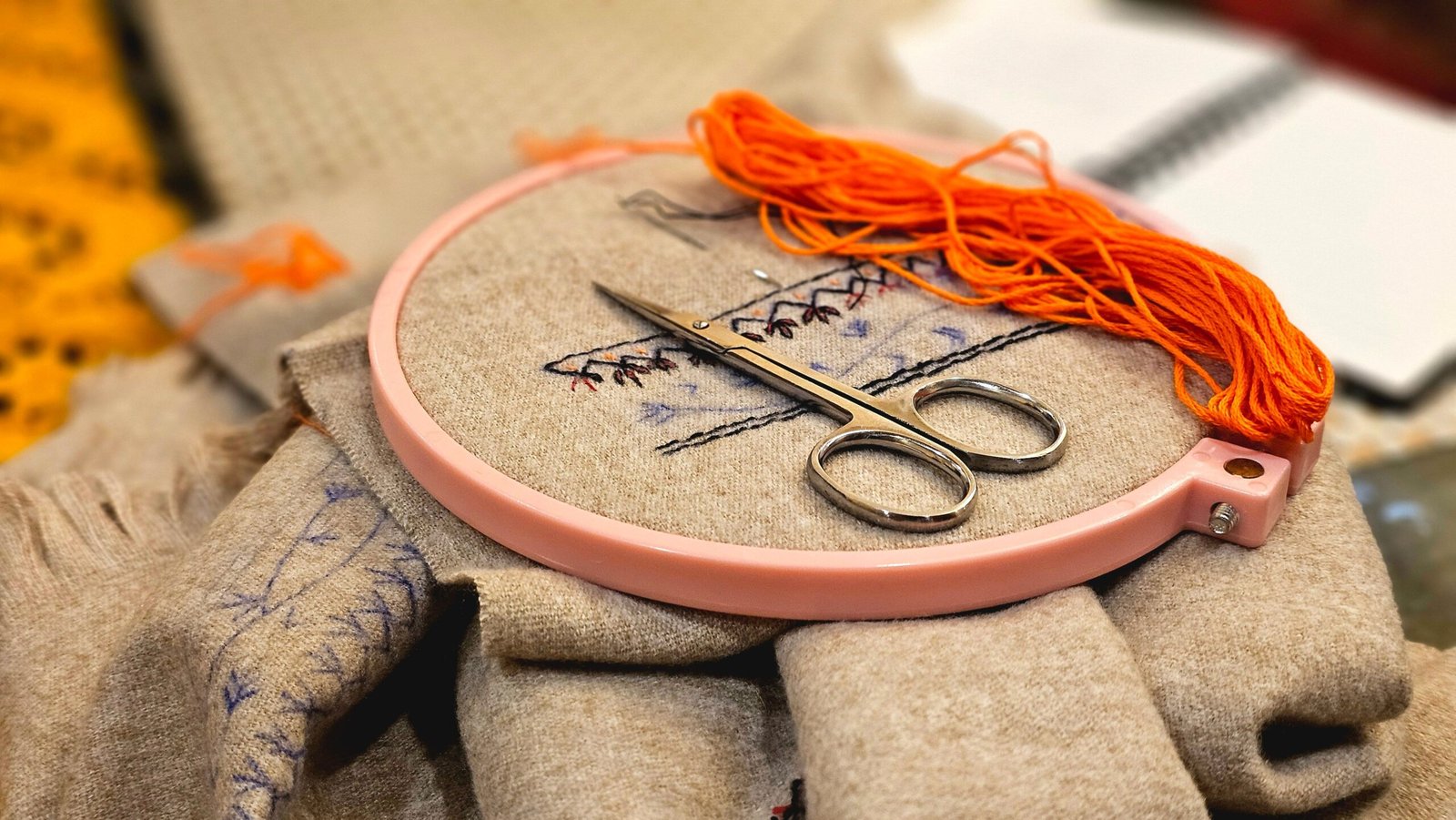
Learning how to do stem stitch embroidery becomes much easier when you break the process into simple stages. Begin by transferring a line or pattern onto your fabric and placing the fabric securely in an embroidery hoop. Bring your threaded needle up through the fabric at the beginning of the design line. Make a small stitch along the line, bringing the needle back up a short distance ahead of the first stitch. Before pulling the thread completely tight, keep the working thread positioned consistently on the same side of the line. Continue moving forward in small sections, inserting the needle behind the previous stitch and bringing it up farther along the design.

As you continue, the overlapping stitches create the characteristic twisted appearance of the stem stitch. Try to keep your stitches relatively similar in length, particularly when working around curves. Avoid pulling the thread too tightly because excessive tension can cause the fabric to pucker or distort. At the same time, leaving the thread too loose can create uneven loops and gaps. The goal is a balanced tension that allows the stitches to rest neatly on the surface of the fabric. When you reach the end of the line, secure the thread on the back of the fabric. With regular practice, your hand will naturally develop a rhythm that makes the stitch faster and more consistent.

Materials You Need for Stem Stitch Embroidery

You do not need an extensive collection of supplies to begin stem stitch embroidery. A medium-weight cotton, linen, or another suitable embroidery fabric is a good starting point because it is relatively easy to stitch through and provides enough structure to support the design. An embroidery hoop is useful for keeping the fabric stretched and stable while you work. You will also need embroidery needles that are appropriate for the fabric and thread you have selected. Embroidery floss is commonly used because it is available in many colors and can be separated into individual strands to create different levels of thickness.

A pair of sharp embroidery scissors is also useful for making clean thread cuts. Beginners may want to use a washable fabric marker or another temporary marking method to transfer simple designs onto fabric. When selecting supplies, remember that comfort and control are more important than having expensive equipment. A basic setup can produce beautiful results when the fabric is properly positioned and the thread is handled carefully. As your skills improve, you can experiment with specialty fabrics, metallic threads, wool threads, silk, different needle sizes, and more elaborate embroidery patterns.

Stem Stitch Embroidery vs. Other Embroidery Stitches

Understanding how stem stitch embroidery differs from other basic stitches can help you decide when to use it. A backstitch, for example, creates a clean and relatively simple outline and is often one of the first stitches taught to beginners. Stem stitch produces a more decorative, textured line because the stitches overlap in a particular way. Chain stitch creates linked loops, while satin stitch is generally used for filling shapes rather than creating narrow outlines. French knots are primarily used for small textured details, such as flower centers or decorative dots.

The main advantage of stem stitch is its ability to produce attractive flowing lines without requiring complicated stitching movements. It works particularly well on gentle curves, making it useful for flower stems, vines, swirls, decorative borders, and handwritten-style lettering. Choosing the correct stitch depends on the effect you want. If you need a simple, crisp outline, backstitch may be appropriate; if you want a slightly raised and textured curved line, stem stitch can be an excellent choice.

Using Stem Stitch for Floral Embroidery

Floral designs are among the most natural applications for stem stitch embroidery. The stitch can be used to create flower stems, winding vines, delicate branches, and the outlines of leaves. Because the stitch naturally follows curved lines, it works especially well for botanical illustrations and traditional floral motifs. You can combine stem stitch with other embroidery stitches to build a complete design. For example, stem stitch can form the branches and outlines while satin stitch fills leaves or petals, and French knots add small decorative details.

Color selection can also dramatically change the appearance of a floral embroidery project. Green threads in different shades can create visual variation in stems and leaves, while brighter colors can be used for flowers. You do not necessarily have to follow realistic botanical colors; modern embroidery often uses unexpected combinations to create a contemporary appearance. Practicing stem stitch embroidery patterns with simple leaves, vines, and flowers is an effective way to improve your ability to follow curves and maintain consistent tension.

Using Stem Stitch for Lettering and Names

Another popular application for stem stitch embroidery is decorative lettering. Since the stitch creates a continuous-looking line, it can be used to trace cursive letters, names, quotations, monograms, and decorative typography. When working with lettering, it is particularly important to pay attention to stitch direction and line thickness. Very small letters may require shorter stitches, while larger letters can accommodate longer stitches.

If you are new to embroidered lettering, start with a simple word written in a clear script or block-style font. Transfer the design onto the fabric and practice following the lines slowly. Avoid rushing around tight curves and sharp corners. Once you become comfortable with the basic technique, you can experiment with multiple thread colors, decorative flourishes, and combinations of stem stitch with other lettering stitches. This makes the technique useful for personalized gifts, wall art, clothing embellishments, handkerchiefs, bags, and decorative fabric pieces.

How to Make Smooth Curves With Stem Stitch

One of the most important skills in stem stitch embroidery is learning to handle curves. A smooth curve depends on using appropriately sized stitches rather than trying to force long stitches around a tight bend. For gentle curves, moderately sized stitches can work well, but tighter curves usually look better when created with shorter stitches. Shorter stitches allow the line to change direction gradually and prevent the embroidery from appearing angular.

Maintaining consistent thread placement is equally important. As you follow a curve, pay attention to where the working thread rests in relation to the stitching line. If the thread repeatedly changes sides, the appearance of the stitch may become inconsistent. Slow stitching is often the best approach when learning. Once you develop muscle memory, you will be able to work curves more quickly without sacrificing the smooth appearance that makes stem stitch so attractive.

Common Stem Stitch Embroidery Mistakes

Beginners often make a few predictable mistakes when learning stem stitch embroidery. One common problem is using stitches that are too long, particularly when following curves. Long stitches can make the line appear uneven and can reduce the characteristic smoothness of the stitch. Another problem is inconsistent tension. Pulling the thread too firmly may cause puckering, while leaving it too loose can produce messy loops. Both problems can usually be corrected through slower stitching and regular practice.

Another frequent mistake is changing the position of the working thread unintentionally. Because the placement of the thread influences the appearance of stem stitch, inconsistent positioning can make one section look different from another. Beginners may also try to correct every small imperfection immediately, but embroidery naturally develops a handmade character. Instead of worrying about absolute perfection, focus on improving stitch consistency and understanding how the thread behaves. With experience, your stitches will become more uniform naturally.

Tips for Better Stem Stitch Embroidery

To improve your stem stitch embroidery techniques, begin with a simple design rather than a complicated pattern. Practice straight lines first, then move to gentle curves and eventually tighter curves. Use a hoop that keeps the fabric comfortably taut without stretching it excessively. Select a thread thickness that is easy to see and control, because extremely fine thread can be frustrating for beginners. It is also useful to practice with one or two strands before experimenting with thicker thread combinations.

Good lighting is another practical consideration. Embroidery involves detailed hand movements, and adequate light makes it easier to see the fabric, needle, and individual stitches. Keep your hands relaxed and avoid pulling the thread aggressively. If you notice the fabric beginning to wrinkle around your stitching, check your tension before continuing. Most importantly, practice regularly. A few short practice sessions can teach you much more about thread control than trying to complete a large complicated design immediately.

Creative Stem Stitch Embroidery Ideas

Once you understand the basic stitch, there are many ways to use stem stitch embroidery creatively. Botanical designs are an obvious starting point, but you can also create decorative borders, abstract line art, landscapes, animals, geometric patterns, personalized names, initials, clothing details, and home décor. The stitch can be used by itself for minimalist designs or combined with filling stitches to create more complex artwork.

You can also experiment with different materials and thread combinations. A single color can create an elegant minimalist appearance, while contrasting colors can make individual lines stand out. Different numbers of embroidery floss strands can produce different visual weights. Combining thick and thin lines within one design can create depth and hierarchy. These experiments are useful because they help you understand that stem stitch embroidery is not limited to traditional floral work; it can become part of many contemporary embroidery styles.

Is Stem Stitch Embroidery Good for Beginners?

Yes, stem stitch embroidery for beginners is an excellent choice because the basic movement is relatively easy to learn and the stitch has many practical applications. Beginners can start with simple straight lines before progressing to curves, flowers, leaves, borders, and lettering. The technique also provides useful lessons in thread tension, stitch spacing, needle control, and following a design line, all of which are valuable skills for learning other embroidery stitches.

Another benefit is that mistakes are generally easy to identify and correct. If a small section does not look right, you can carefully remove those stitches and try again without necessarily affecting the rest of the design. This makes stem stitch a low-pressure technique for developing confidence. As your skills grow, you can combine it with other stitches and create increasingly sophisticated projects.

Conclusion

Stem stitch embroidery is a classic hand embroidery technique that remains useful because it combines simplicity with versatility. Its smooth, slightly twisted appearance makes it particularly effective for stems, vines, outlines, borders, lettering, and decorative curves, while its straightforward construction makes it accessible to beginners. By practicing stitch length, thread tension, direction, and curve control, you can quickly improve the quality and consistency of your work. The technique does not require a large collection of supplies, which makes it an affordable and approachable way to begin exploring embroidery.

Whether you are learning embroidery for the first time or expanding your collection of traditional stitches, stem stitch is worth mastering. Start with basic practice lines, progress to curved shapes, and then experiment with floral patterns, lettering, clothing embellishments, and decorative artwork. With patience and regular practice, stem stitch embroidery can become one of the most dependable stitches in your embroidery toolkit and a foundation for creating beautiful handmade designs.

Frequently Asked Questions About Stem Stitch Embroidery

What is stem stitch embroidery used for?

Stem stitch embroidery is commonly used for flower stems, vines, branches, outlines, curved borders, lettering, and decorative line work. Its smooth appearance makes it especially useful for designs that contain flowing curves.

Is stem stitch embroidery easy for beginners?

Yes. Stem stitch is generally considered beginner-friendly because it uses a repeated movement that becomes easier with practice. Starting with straight lines and gentle curves can help beginners develop good thread control before moving to complicated designs.

What fabric is best for stem stitch embroidery?

Cotton and linen are popular choices for hand embroidery, particularly for beginners. A fabric with a stable weave makes it easier to control the needle and maintain consistent stitches.

How many strands of embroidery floss should I use?

The ideal number depends on the desired thickness and the fabric. Using fewer strands creates a finer line, while additional strands create a thicker and more prominent stitch. Beginners can experiment with different strand counts on scrap fabric.

Can stem stitch be used for lettering?

Yes. Stem stitch works very well for embroidered lettering, names, monograms, and decorative words because it creates smooth continuous-looking lines that can follow curved letterforms.

Why does my stem stitch look uneven?

Uneven stem stitch is often caused by inconsistent stitch length, thread tension, or working-thread placement. Practicing slowly and keeping the stitches relatively uniform can significantly improve the appearance.

Can stem stitch embroidery be combined with other stitches?

Absolutely. Stem stitch can be combined with satin stitch, French knots, backstitch, chain stitch, lazy daisy stitch, and many other techniques. Combining stitches allows you to create more detailed floral, botanical, and decorative embroidery designs.

Continue Reading

blog

Yes I Will Lyrics: Meaning, Themes, and Song Overview

Published

on

Yes I Will lyrics

People searching for Yes I Will lyrics are often looking for more than simply the words to a song. They may want to understand the message behind the lyrics, learn what inspired the song, discover its central themes, or find out why it has connected with so many listeners. Songs built around a declaration such as “yes, I will” can carry a particularly strong emotional message because they often express determination, trust, commitment, hope, or a willingness to continue despite difficult circumstances. Rather than treating a song as nothing more than a collection of lines, it can be helpful to look at the larger idea that connects those lines together and consider how the songwriter uses repetition, emotion, and imagery to communicate its message.

When people search for Yes I Will lyrics, search intent can also vary considerably. Some readers may be trying to identify a song they heard somewhere, while others may already know the title and want to understand its meaning. Still others may be looking for information about the artist, the background of the recording, or the themes that make the song memorable. This guide explores those aspects while avoiding reproduction of the complete copyrighted lyrics. Instead, it provides a useful overview of what listeners can look for when interpreting the song and explains why a simple statement of commitment can become such a powerful musical theme.

What Are the “Yes I Will” Lyrics About?

The central idea associated with Yes I Will lyrics is a strong expression of willingness and commitment. The phrase itself is simple, but its meaning can become much deeper depending on the surrounding musical and lyrical context. In many songs, a declaration of “yes” represents a decision to respond positively even when circumstances are uncertain. The speaker may be expressing confidence, loyalty, faith, perseverance, or an intention to continue moving forward. This makes the song relatable because listeners can connect the message to their own experiences, whether they are facing challenges, making an important decision, or trying to maintain hope during a difficult period.

One reason this type of lyrical message can be effective is that it transforms an abstract feeling into a direct statement. Instead of simply describing hope or determination, the song can communicate those ideas through a personal declaration. The repeated emphasis on willingness gives the listener a sense of movement and purpose. This is also one reason people may return to Yes I Will lyrics when they need encouragement or want to reflect on a particular moment in their lives. Music can provide emotional reinforcement, and a song centered around choosing to say yes can feel especially meaningful when the listener is dealing with uncertainty.

Why the Phrase “Yes I Will” Is So Powerful

The words “yes” and “I will” communicate two related ideas: acceptance and intention. “Yes” suggests agreement or willingness, while “I will” points toward a future action. Together, they create a statement that is both emotional and forward-looking. This combination can make Yes I Will lyrics particularly memorable because the listener is not simply hearing an observation about life; they are hearing a commitment to what comes next.

This kind of language is common in inspirational music because it allows listeners to place themselves inside the song. A person can interpret the declaration according to their own circumstances and experiences. For one listener, it might represent faith and trust. For another, it could symbolize resilience after a difficult period. Someone else might hear it as a message about personal growth or accepting a new responsibility. The broad nature of the statement gives the song room to carry different meanings for different audiences without losing its central emotional direction.

Major Themes to Look for in “Yes I Will”

One of the most important themes to consider when exploring Yes I Will lyrics is perseverance. Songs that emphasize a willingness to continue often speak to the human desire to move forward even when the outcome is not guaranteed. Perseverance does not necessarily mean that everything is easy or that obstacles disappear. Instead, it can mean choosing to continue despite those obstacles. This distinction can make an inspirational song feel more realistic and emotionally powerful because it recognizes difficulty while still emphasizing determination.

Another important theme is trust. A declaration of willingness can involve trusting a person, a purpose, a path, or a belief. The song’s emotional impact may therefore come from the tension between uncertainty and confidence. The speaker may not know exactly what will happen next, yet still chooses to move forward. This is an idea that many listeners can understand because real-life decisions frequently require people to act before they have complete certainty.

Hope can also be an important part of interpreting Yes I Will lyrics. Hope is often most meaningful when circumstances are challenging, and music can give that feeling a memorable form. A song can transform hope from an abstract concept into something listeners can repeat, remember, and share. When a central phrase is repeated throughout a composition, it can function almost like an affirmation, reinforcing the emotional message each time the listener hears it.

The Emotional Appeal of the Song

The emotional appeal of Yes I Will lyrics comes partly from their directness. Listeners do not need to understand complicated language to recognize the feeling behind a declaration of commitment. Simple phrases can sometimes be more powerful than elaborate descriptions because they allow the audience to focus on the emotion rather than deciphering difficult wording.

Music also changes how words are experienced. The same phrase can feel completely different depending on the melody, vocal delivery, harmony, rhythm, and arrangement surrounding it. A calm musical arrangement may make the message feel reflective, while a more powerful arrangement can make the same idea sound like a declaration of confidence. This is why analyzing Yes I Will lyrics separately from the recording only provides part of the picture. The complete meaning comes from the relationship between the words and the way they are performed.

Why People Search for “Yes I Will Lyrics”

The search phrase Yes I Will lyrics is useful from an SEO perspective because it represents a very specific form of search intent. Someone entering this phrase into a search engine is likely interested in the song itself, but that does not necessarily mean they want only the lyrics. Searchers may also be looking for the artist, song meaning, interpretation, official recording, background information, or a particular section they remember.

A strong article should therefore answer several related questions naturally rather than repeating the exact keyword unnecessarily. Covering topics such as the song’s meaning, major themes, emotional impact, interpretation, and frequently asked questions can make the page more useful to readers. Good SEO content should prioritize usefulness and readability instead of relying on excessive keyword repetition. The phrase Yes I Will lyrics can appear naturally in important headings and paragraphs while related terms provide additional context for search engines and readers.

How to Understand the Meaning of “Yes I Will”

A useful way to interpret Yes I Will lyrics is to identify the speaker’s situation and then examine what the declaration represents. Ask what the speaker is agreeing to, what circumstances surround the decision, and why the decision matters. Looking at these elements can reveal whether the phrase represents faith, courage, love, responsibility, perseverance, or another form of commitment.

It is also helpful to consider repetition. When a songwriter repeatedly returns to a particular phrase, that repetition usually signals that the idea is central to the composition. Rather than treating repeated wording as filler, listeners can consider what emotional function it serves. Does it reinforce confidence? Does it create a sense of reassurance? Does it sound like a personal promise? These questions can lead to a deeper interpretation without requiring the reader to reproduce the complete lyrics.

The Difference Between Lyrics and Lyrics Meaning

When people search for Yes I Will lyrics, they sometimes use the phrase to find the actual words of a song, while others are interested in an explanation of those words. These are two different types of search intent. Lyrics searches are primarily navigational or informational, whereas a lyrics-meaning search is more interpretive.

For content creators, recognizing this distinction is important. A useful article can address the reader’s interest in the song without publishing copyrighted lyrics in full. Instead, the article can explain the themes, discuss the central message, provide limited quotations where legally appropriate, and direct readers toward legitimate sources for the complete lyrics. This approach creates useful original content while respecting copyright.

How to Analyze the Song as a Listener

If you want to understand Yes I Will lyrics more deeply, listen to the song several times with a different purpose each time. During the first listen, focus on your overall emotional reaction. During the second, pay attention to the central idea and repeated phrases. On another listen, consider how the music changes the meaning of particular moments. You can also think about how the song relates to your own experiences, because personal interpretation is an important part of how music develops meaning.

It can also be useful to compare the verses and chorus conceptually. Verses often provide context or develop an idea, while a chorus may summarize the central emotional statement. If the song repeatedly returns to a declaration of willingness, consider how the earlier sections prepare the listener for that declaration. This can reveal the structure of the songwriting and explain why the central phrase feels so memorable.

Why Inspirational Songs Remain Popular

Inspirational songs often remain relevant because their themes are not limited to one particular moment. Ideas such as hope, perseverance, courage, trust, and commitment are universal experiences. A listener can discover a song years after it was released and still find meaning in it because the emotional circumstances described by the music remain recognizable.

The appeal of Yes I Will lyrics can therefore extend beyond the song itself. The central concept can become something listeners associate with personal decisions, difficult periods, celebrations, or moments of renewed confidence. Music has a unique ability to attach emotional memories to words, which can make a simple phrase meaningful long after the first listening experience.

Using “Yes I Will Lyrics” as an SEO Keyword

For publishers creating content around Yes I Will lyrics, the best approach is to use the keyword naturally rather than forcing it into every sentence. The main keyword can appear in the page title, introduction, one or two relevant headings, the conclusion, and selected FAQ questions. Related phrases such as “Yes I Will song meaning,” “Yes I Will lyrics meaning,” “song interpretation,” and “meaning behind Yes I Will” can broaden the article’s topical relevance.

The quality of the surrounding content matters just as much as keyword placement. A page should answer genuine questions, provide original explanations, use clear headings, and avoid unnecessary repetition. Long-form content can perform well when it genuinely satisfies the reader’s intent, but simply making an article longer does not automatically make it better. Each section should contribute useful information and maintain a clear connection to the topic.

Frequently Asked Questions

What are “Yes I Will” lyrics about?

The phrase and themes associated with Yes I Will lyrics generally center on willingness, commitment, hope, perseverance, or trust. The exact interpretation depends on the particular song and its broader lyrical and musical context.

What is the main message of “Yes I Will”?

The main message can be understood as a declaration of willingness and determination. Rather than focusing only on present circumstances, the phrase looks toward a decision to move forward or remain committed.

Why do people search for “Yes I Will lyrics”?

People search for Yes I Will lyrics for several reasons, including finding the song, understanding its meaning, identifying a memorable passage, learning about the artist, or exploring the themes behind the recording.

Can I find the complete lyrics online?

Complete copyrighted lyrics should generally be obtained from an authorized lyrics provider, the artist’s official channels, or another legitimate source rather than reproduced in an article without permission.

How can I understand the meaning of a song’s lyrics?

Start by identifying the main theme, examining repeated phrases, considering the speaker’s perspective, and listening to how the melody and vocal performance influence the words. Personal experiences can also affect how a listener interprets a song.

Are “Yes I Will” lyrics inspirational?

The themes of willingness, hope, determination, and commitment can certainly make a song inspirational for listeners. The precise emotional message depends on the specific song and the circumstances represented in it.

Conclusion

Yes I Will lyrics can be explored as much more than a collection of words. The central idea of saying yes and committing to what comes next can communicate powerful themes of determination, trust, hope, and perseverance. By examining the song’s repeated ideas, emotional delivery, musical arrangement, and broader message, listeners can develop a deeper appreciation of why the song resonates with them.

For readers searching for Yes I Will lyrics, understanding the meaning behind a song can make the listening experience more rewarding. Instead of simply looking for individual lines, consider the story, emotion, and intention that connect those lines together. Whether the song represents encouragement, faith, personal commitment, or the courage to move forward, its most lasting impact may come from the way listeners connect its message to their own lives.

Continue Reading

Trending